
OSIRIS AI Training Bundle
from selection → to simulator → to real drones → to missions.
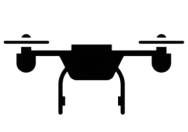
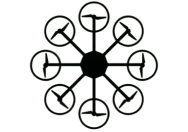
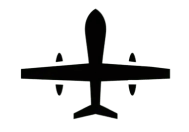
Request a demoThe system supports three primary UAV specializations:
Theory & Testing
Pre-flight gate includes 5 video modules
- UAV Fundamentals (Mandatory)
- UAV types and operational roles
- Platform limitations and common operator errors
- Practical aerodynamics (no formulas, applied understanding)
- Configuration & Components
- Frames, motors, propellers
- Flight Controllers, ESCs, GPS
- Cameras, VTX, antennas
- Control & Communications
- RC links (ELRS, Crossfire)
- Video links (Analog / Digital)
- Latency, interference, signal loss
- Video loss scenarios
- RC link loss
- GPS spoofing / jamming
- Power Systems & Risk – LiPo / Li-Ion batteries
- Discharge profiles
- Fire and handling safety
- Safety & Fail-Safe Logic
- Video loss scenarios
- RC link loss
- GPS spoofing / jamming
Simulator Training Programs
The simulator phase is **strictly specialization-based**.
Operators train only on the UAV type they selected during theory and testing.
Each program is structured from basic control → abnormal scenarios → mission-level tasks.
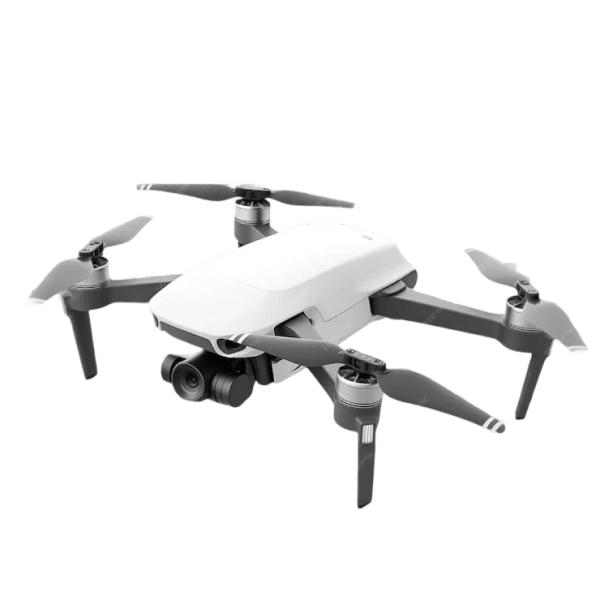
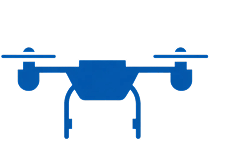
FPV Drone
Total simulator time:
40–60 hours
Training blocks:
- Basic FPV control (10–15 h) Acro mode fundamentals, throttle control, yaw/pitch coordination, camera angle adaptation.
- Low-altitude flight (8–12 h) Terrain following, obstacle proximity, urban environments, narrow passages.
- High-speed maneuvers (6–10 h) Rapid direction changes, dive–pull-up profiles, speed control under stress.
- Signal degradation & EW stress (6–8 h) Video noise, dropouts, RC latency, decision-making with partial information.
- Mission scenarios (6–10 h) Time-critical target approaches, precision terminal phase, mission execution logic.
Exit criteria:
Stable acro control, predictable trajectories, correct decisions under signal loss.

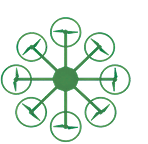
Bomber / Multirotor
Total simulator time:
25-40 hours
Training blocks:
- Basic stabilized flight (6–10 h) Position hold, smooth vertical control, flight mode switching.
- Hover & precision positioning (6–8 h) Fixed-point hover, micro-corrections, drift compensation.
- Payload handling (6–8 h) Simulated payload weight, release timing, post-drop balance changes.
- Emergency scenarios (4–6 h) Motor failure, GPS loss, abort logic, safe recovery.
- Mission scenarios (3–6 h) Coordinate-based drops, repeated sorties, crew coordination (operator + spotter).
Exit criteria:
Consistent precision hover, safe drop execution, correct abort decisions.

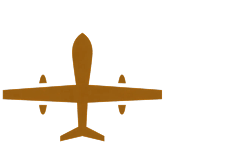
Fixed Wing
Total simulator time:
30-50 hours
Training blocks:
- Basic wing control (8–12 h) Assisted/manual flight, airspeed management, altitude control.
- Navigation & route planning (8–12 h) Waypoints, autopilot interaction, contingency routing.
- Launch & recovery (6–8 h) Hand/catapult launch, landing patterns, emergency recovery.
- Link loss & fail-safe logic (4–6 h) RC/video loss, glide logic, return or termination decisions.
- Mission scenarios (4–8 h) Area reconnaissance, endurance management, return planning.
Exit criteria:
Stable long-duration flight, safe launch/recovery, reliable navigation decisions

Universal Base Kit
(All Tracks)
This kit provides all operators with essential hardware—workstation, controller, FPV goggles, batteries, and charging stations—forming the foundation for any UAV training path.
Power & Infrastructure
- 1×portable generator 5 kW (shared use)
- 2×EcoFlow / Bluetti-class power stations
- Power distribution units, extension cables
Control & Observation
- 3 × professional RC controllers
- 3 × FPV goggles (DVR enabled)
- Instructor– student audio headsets
Command & Training Space
- 1 × 55” TV (briefings + AAR) –
- 1 × instructor workstation (GPU-ready) –
- 2 × trainee workstations (GPU-ready)
- Local network router
Logistics & Safety
- Multi-port smart chargers
- Battery fireproof cases
- Basic field toolkits
- Transport cases
FPV Operator Kit
UAV Pool (total: 8):
- 4×training FPV drones (5″ / 7″)
- 1×operational FPV (day)
- 1×operational FPV (night)
- 2×FPV Interceptors (high-speed)
Equipment:
- Analog FPV video systems (low latency)
- ELRS receivers
- Day + low-light FPV cameras
Skills Focus:
- Acro fundamentals
- Low-altitude control
- Basic day/night operations
- Introductory interception techniques
Bomber
Operator Kit
UAV Pool:
- 2×training multirotors
- 2×operational bomber drones
Equipment:
- Basic payload drop mechanisms
- Stabilized camera
Skills Focus:
- Precision hover
- Payload release accuracy
- Crew coordination basics
Wing Operator Kit
UAV Pool:
- 2×training fixed-wing UAVs
- 1×operational long-range wing
Equipment:
- Autopilot system
- Long-range telemetry
- Launch and recovery kit
Skills Focus:
- Basic navigation
- Launch and landing
- Introductory recon missions
Mission-based training
This phase trains operators on realistic missions using their chosen UAV. Each mission includes objectives, execution, and an After Action Review to evaluate performance and readiness for real-world operations.
Each mission includes:
- Mission briefing
- KPI objectives
- Flight recording
- After Action Review (AAR)
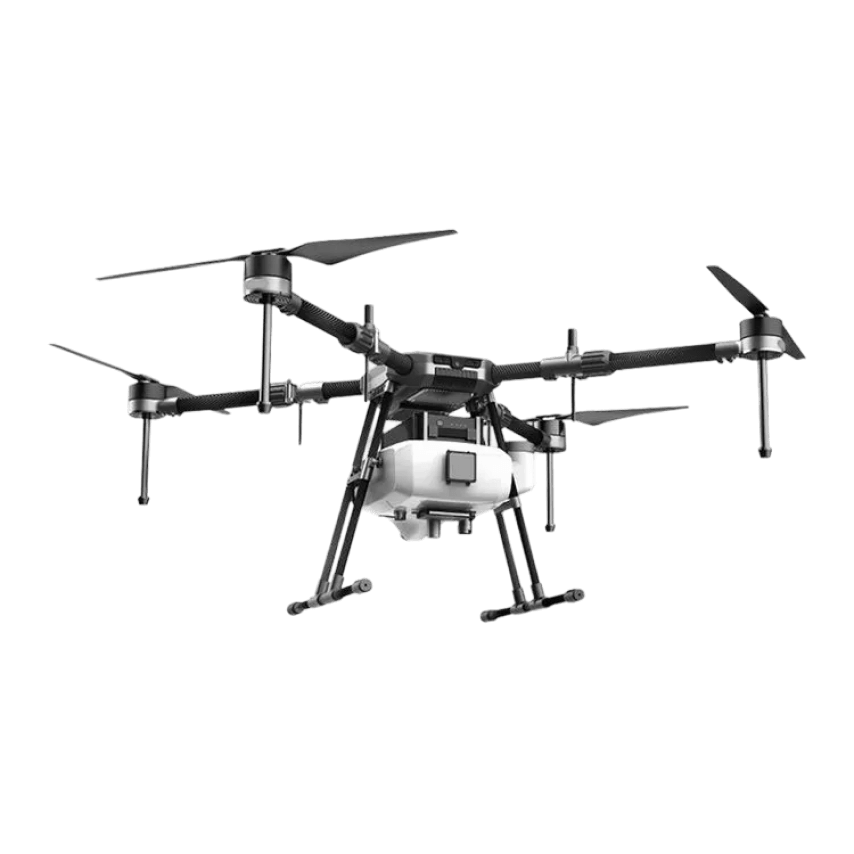
- Tactical approach runs
- Urban and confined environments
- Electronic warfare stress scenarios
- Precision strike missions
- Sequential drop patterns
- Night operations
- Area reconnaissance
- Patrol missions
- Simulated fire correction support
Operator certification

Basic
Operator level 1
Certificates specify:
UAV specialization

Advanced
Operator level 2
Certificates specify:
Simulator and real flight hours

Mission Ready
Operator level 3
Certificates specify:
Mission set completed