Top 6 Use Cases for Drone in a Box Systems
Autonomous drones have been “almost there” for years. The hardware works. The sensors are reliable. The AI stack has matured enough to handle pattern detection at scale. And yet, most deployments still orbit around manual operation and short flight windows.
But recent advances in battery and sensing technology have paved the way for more self-contained operations with drone-in-a-box systems.
What is a Drone-in-a-Box?
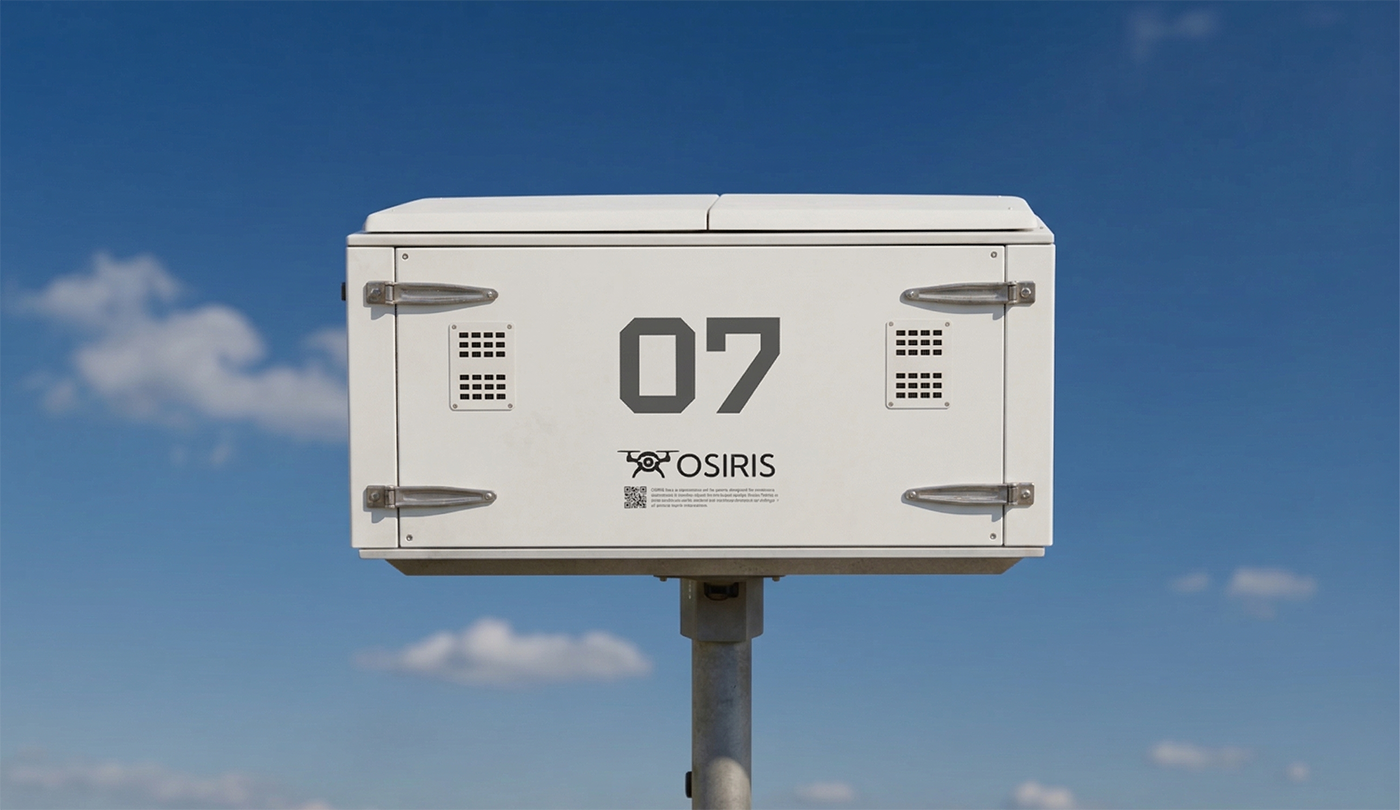
As the name suggests, a drone-in-a-box is a UAV, housed in a ground station that handles charging, protection, and deployment. The box opens, the drone launches, completes a mission, and returns to recharge. No pilot on-site.
Under the hood, the system is a tight coupling of three layers:
- AI-powered autonomous drone equipped with sensors and payloads
- Docking station that manages power, protection, and connectivity
- Software layer that handles mission planning, data collection, and reporting
The interesting part is in how these layers interact. The docking station autonomously maintains uptime, ensures flight readiness, and keeps the UAV connected to remote operators. That allows one person to supervise multiple units across dispersed locations without being physically present.
Drone regulation largely limits such deployment scenarios, as most regions require some level of human oversight. But as new BVLOS approvals get issued, more drone-in-a-box use cases emerge.
6 Use Cases of Drone-in-a-Box Systems
Most people don’t seek out drones just for the sake of automation. But rather, they want to solve a frustrating bottleneck — a blind spot in coverage, inspection delays, decisions made with incomplete information.
And that’s usually where a drone-in-a-box system finds its way in — not as a headline innovation, but as a way to smooth out what keeps breaking in day-to-day operations.
1. Industrial Security
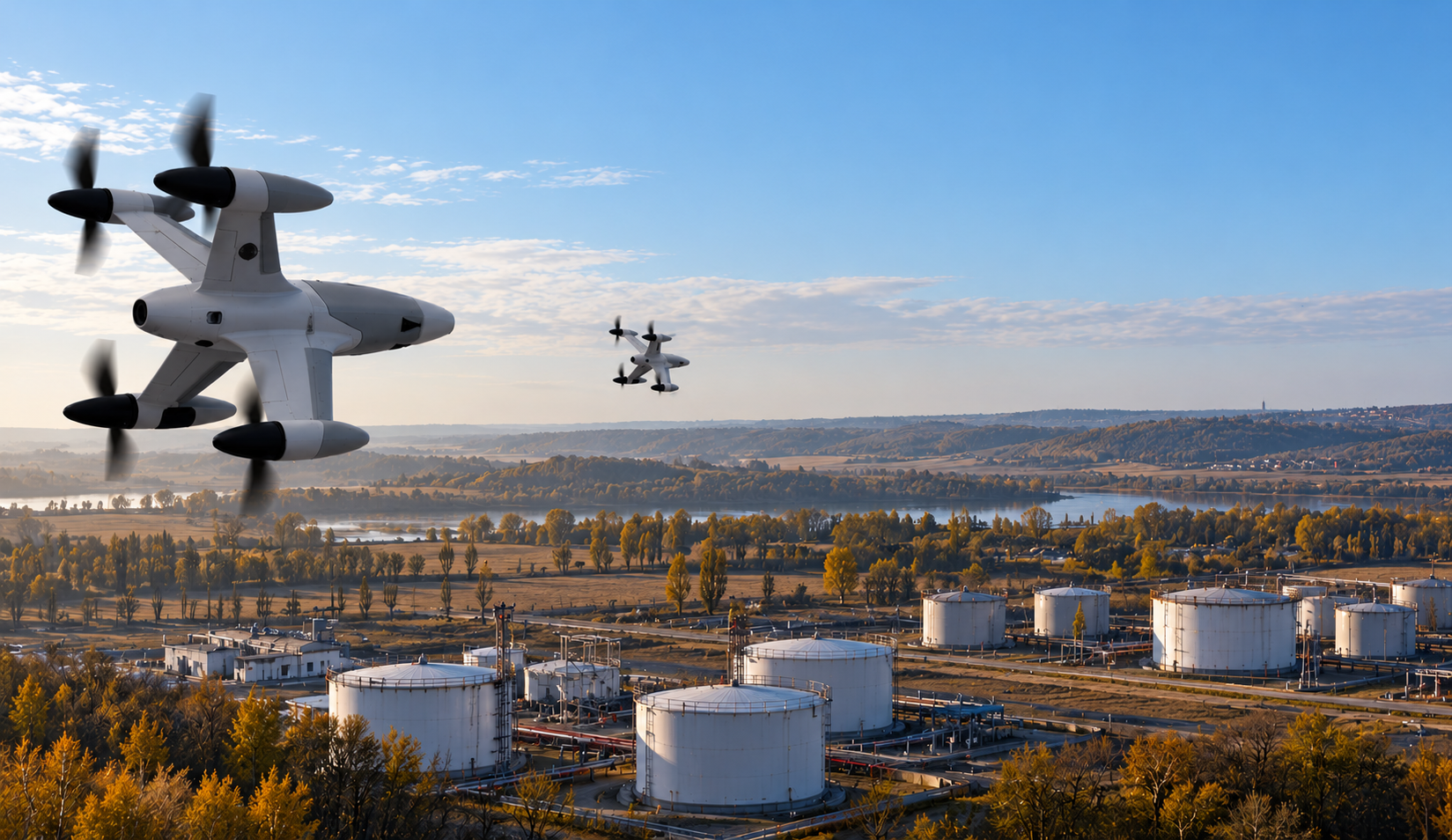
Picture a large industrial site at night. Cameras are fixed. Guards follow set routes. Most of the time, nothing happens. But when something does, it tends to fall just outside the frame or just between patrols.
A drone-in-a-box system shifts that dynamic. Instead of waiting for a trigger, the site gets a layer of continuous aerial presence. Patrols run on schedule, but they can also respond the moment something deviates from the norm.
What this adds in practice:
- Persistent aerial coverage of large perimeters and remote areas
- Instant anomaly detection, from unauthorized movement to unusual activity patterns
- Thermal monitoring that can flag overheating equipment or fire risks before alarms trigger
- Time-stamped visual records that create a clear audit trail for investigations and insurance claims.
OSIRIS drone-in-a-box system, for example, can be programmed to run checks based on your insurance and compliance policies. The companion software analyzes your current coverage, exclusions, compliance requirements, and potential risks. Based on this, it designs a set of triggers for activating autonomous drone patrols.
The UAV collects visual, thermal, and sensor data, which gets validated against your compliance and security requirements in real-time. So, your team gets a reliable stream of risk intelligence, real-time incident alerts, hard evidence, and detailed recommendations for improving your site security further.
2. Industrial Inspections
Most industrial inspections follow the same pattern: schedule, preparation, asset shutdown (if needed), and dispatching a crew. It’s expensive, time-consuming, and often delayed until something forces the issue — a compliance requirement or risk of asset breakdown.
In contrast, a drone-in-a-box system can fly the same route every week, or every day if needed, for a fraction of the cost. It captures consistent data without scaffolding, without rope access, without interrupting production.
Shell Pernis, for instance, runs 1,000+ remote drone-in-a-box flights each month at two major refineries in Rotterdam Harbour. Drones capture RGB, thermal, video, and emissions data, which is streamed securely to Shell’s inspection workflows. All anomalies are immediately flagged by Shell’s machine vision models. And human teams are then dispatched for further investigation. This allows Shell to detect issues earlier without interrupting operations and switch from reactive to more predictive maintenance.
3. Cattle Monitoring
On a large farm, visibility is always partial. Farmers rely on routine foot checks to understand what’s happening across their herd. But when animals are spread across wide pastures, subtle changes in behavior can go unnoticed until they turn into real problems.
Drone-in-a-box systems give farmers a real-time view of the herds, 24/7. OSIRIS AI drone in a box, for example, was pre-trained to:
- Continuously monitors cow activity and positioning
- Identify unusual behavior, isolation, or stress signals
All the captured data is streamed to the reporting dashboard, so you can get alerted and intervene sooner. And in livestock management, catching those signals early can make all the difference to animal welfare.
Beyond cattle management, drones have other promising use cases in agriculture — early field planning, crop stress detection, and optimized water management, among others.
4. Public Safety
Timing is everything in emergency response. First responder teams need to act fast, but often with limited data. By the time a full picture forms, critical decisions have already been made (for better or worse).
Pre-positioned drone-in-a-box systems compress that uncertainty. The moment an alert comes in, the drone launches. Within seconds, there’s a live aerial view of the scene. The British Transport Police, for example, deployed drone-in-a-box systems to remotely monitor railway networks, enabling faster response times and broader coverage without increasing personnel.
So instead of arriving blind, teams arrive informed. They know where to go, what to expect, and how to prioritize their actions.
5. Mining Site Management
A lot of action happens at mining sites. Equipment moves. Terrain shifts. Stockpiles grow and shrink. And across all of it, safety risks are always present. Keeping an accurate, up-to-date view of the site is both critical and difficult.
With a drone-in-a-box system, the site gets scanned regularly without needing to plan each survey as a separate task. Data flows in continuously — imagery, volumetrics, conformance checks, or any other parameter you need to collect.
In deployments like the Gruyere mine project in Australia, autonomous drones perform
daily open-pit surveys for conformance, blast planning, and volumetrics, as well as stockpile surveys for inventory tracking. Their operation becomes more responsive because the feedback loop tightens and risks are detected early on.
6. Water Patrol and Environmental Monitoring
Monitoring water environments has always been difficult. Rivers, coastlines, and reservoirs are large, often remote, and their conditions are constantly changing. Drone-in-a-box systems bring continuous, automated oversight over these, too.
The Hollyway Iron Series AI drone, for example, was trained to detect the following anomalies with RGB and thermal imaging:
- Algae blooms and water quality issues
- Floating debris or foreign objects
- Illegal fishing activity
- Pollution or sewage discharge events
These signals get picked up sooner, when intervention still has leverage. And in environmental contexts, that timing often determines how far a problem travels before it’s contained.
Takeaways
Drone-in-a-box systems make traditionally spaced-out work continuous. Teams that relied on scheduled checks start working with a steady stream of signals. Decisions move a little closer to the moment something changes, rather than after the fact.
Worth pausing on: none of this requires entirely new workflows. Systems like OSIRIS AI drones are compact and easy to slot into existing operations to gain deeper visibility at any time, in almost any place.