Drone Classes Explained: Which Capabilities Matter the Most?
When we talk about drone classes, we usually mean weight or airframe size. In reality, class is defined by capability: what the drone can do with its battery, hardware, and software.
The truth is, every drone differs as much in its hardware characteristics and the type of UAV application layer it can support — and that’s what we’re looking into in this post.
What are Drone Classes?
Most regulatory frameworks primarily group drones by mass or airframe size, e.g., Group 1 to 5 in the US. But such classifications give away little about the drone’s capabilities, i.e., what a certain model is expected to do.
A more accurate way to identify drone classes would be by their mission profile, operating environment, and risk tolerance levels. For example, a consumer-grade drone and an industrial inspection drone may be of the same airframe size, but the latter has much stronger comms links and a greater degree of software-defined automation.
Looking at the drone classes through this lens provides a more accurate basis for evaluating UAV capabilities and, critically, the UAV app architecture needed to support them.
In that sense, we identify the following three drone classes:
- Consumer drones, designed for short, low-risk flights under direct human supervision.
- Commercial UAVs, built to fly longer distances, carry heavier payloads, and perform automated workflows.
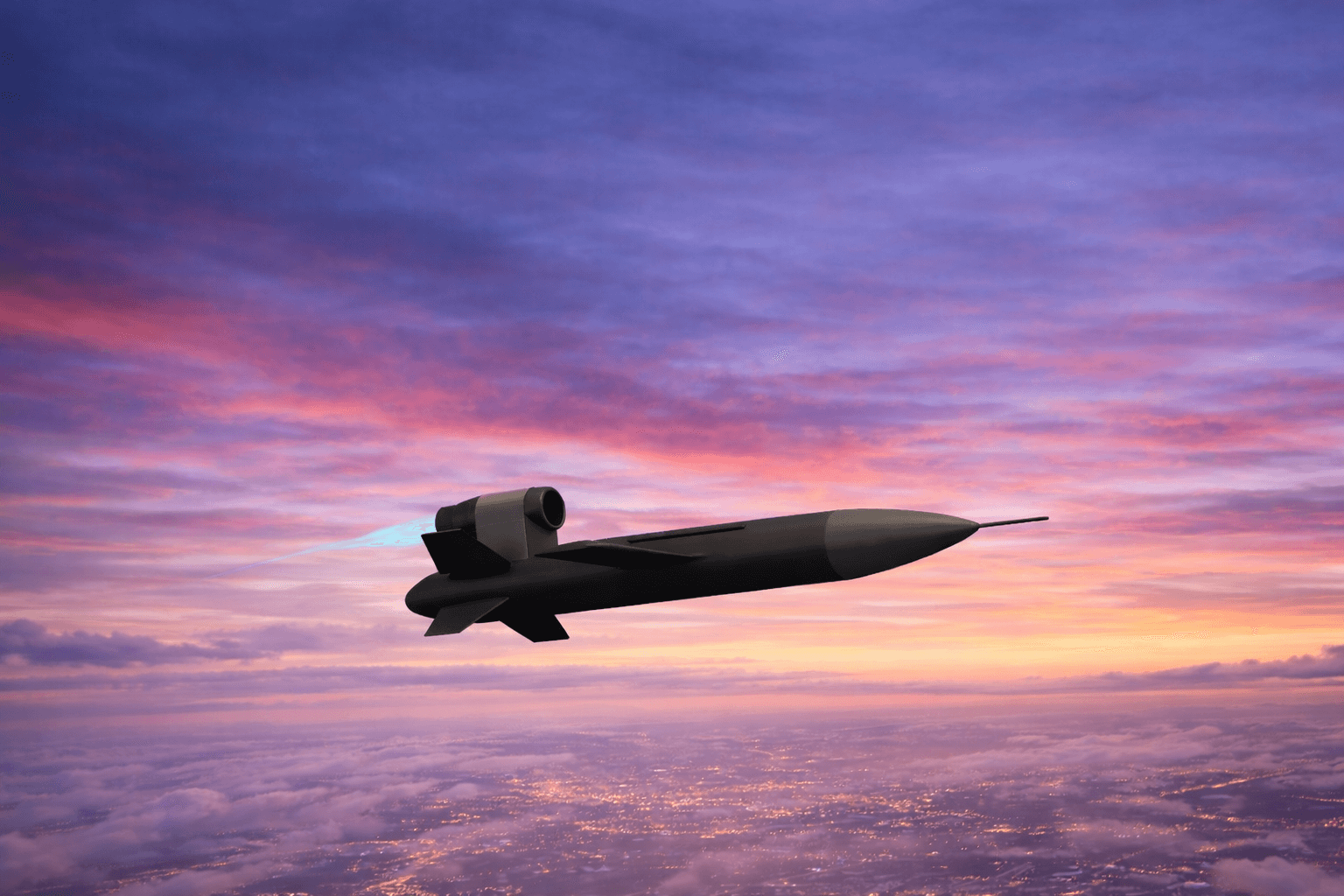
- Tactical and ISR-class UAVs can operate in high-risk or contested environments and rely on autonomy to complete missions when human control or GNSS is limited.
These differences shape the capabilities a UAV app must provide, from basic flight assistance to full mission autonomy.
Consumer Drones
Hobby drones for aerial photography or racing mostly use onboard OS as an assistive control layer. Flight software priorities center on stability, ease of operation, and rapid onboarding rather than autonomy or high fault tolerance. Mission logic is limited and typically constrained to simple waypoint execution or automated recovery behaviors.
Generally, such drones aren’t wired to operate under uncertainty. Loss of GNSS, sensor degradation, or connectivity link interruption is treated as an edge case rather than a core design condition. As a result, the application layer favors usability over resilience.
Key characteristics of this class:
- GNSS-dependent navigation and stabilization
- Basic waypoint missions and return-to-home logic
- Mobile-first user interface with minimal configuration
- Assumed operator presence and manual override
- Little to no requirement for redundancy or autonomous decision-making
Commercial & Industrial Drones
Commercial UAVs have higher operational expectations placed upon them. The UAV app must support repeatable workflows, predictable flight behavior, and consistent data capture across varied environments. Mission planning evolves into a structured process, often tied to timelines, asset geometry, or survey grids, with tighter coupling between flight paths and sensor payloads.
For this drone class, failure modes matter a lot. Health monitoring, failsafe logic, and positioning accuracy are no longer secondary concerns but must-have features for safe deployment. The drone controller shifts from enabling flight to enforcing operational discipline. So the defining question becomes whether the system can perform reliably under real-world constraints, not just whether it can complete a flight.
Key characteristics for this class:
- Structured mission planning and repeatable execution
- Integrated payload and sensor management
- System health monitoring and defined failsafe states
- Improved positioning accuracy and flight repeatability
- Reduced reliance on constant manual intervention
Tactical, ISR, and Mission-Critical UAVs
Tactical-grade and ISR-class drones operate under the assumption that external dependencies will fail. GNSS may be unavailable or compromised. Communications may be degraded or severed at any moment. And operator input may be intermittent. So the onboard flight software must function as an autonomous mission controller, not just a flight assistant.
Navigation relies on multi-sensor fusion and continuous correction under interference or spoofing conditions. Autonomous take-off, precision hover, and return-to-launch have to be baseline capabilities. Deterministic behavior is mandatory.
At this level, convenience-driven design gives way to resilience, predictability, and tightly controlled system responses. The UAV app becomes a mission-critical component whose failure directly translates to mission failure.
Key characteristics for this class:
- GNSS-denied navigation and inertial or hybrid sensor fusion
- Autonomous take-off, hover, and RTL execution
- Real-time correction under EW or signal interference
- Deterministic behavior and bounded system responses
- Tight software–hardware integration
Mission continuity with minimal operator dependency
Designing Scalable Apps for Multiple Drone Classes
As UAV platforms scale across drone classes, the application layer must scale with them. Hard-coded assumptions about GNSS availability, operator presence, or benign environments quickly become failure points when systems are pushed beyond their original mission scope.
So a scalable UAV app architecture avoids class-specific rewrites by separating core navigation, control, and autonomy logic from platform-level constraints.
At its core, this means modular design. Sensor fusion, mission planning, and control loops should be adaptable to different hardware configurations and levels of autonomy without changing system behavior. As operational risk increases, the architecture must support deterministic execution, graceful degradation, and autonomy that doesn’t depend on constant external input.
You can build this type of drone controller with Osiris Drone OS — the first, fully vendor-agnostic unified drone app development platform with built-in support for autonomous flight, swarm coordination, and AI-powered decision-making.
Develop and deploy drone apps with computer vision capabilities and edge data sensor fusion. Seamlessly connect hardware, software, and mission logic across different drone classes without heavy reengineering.
Contact us for a personalized platform demo.