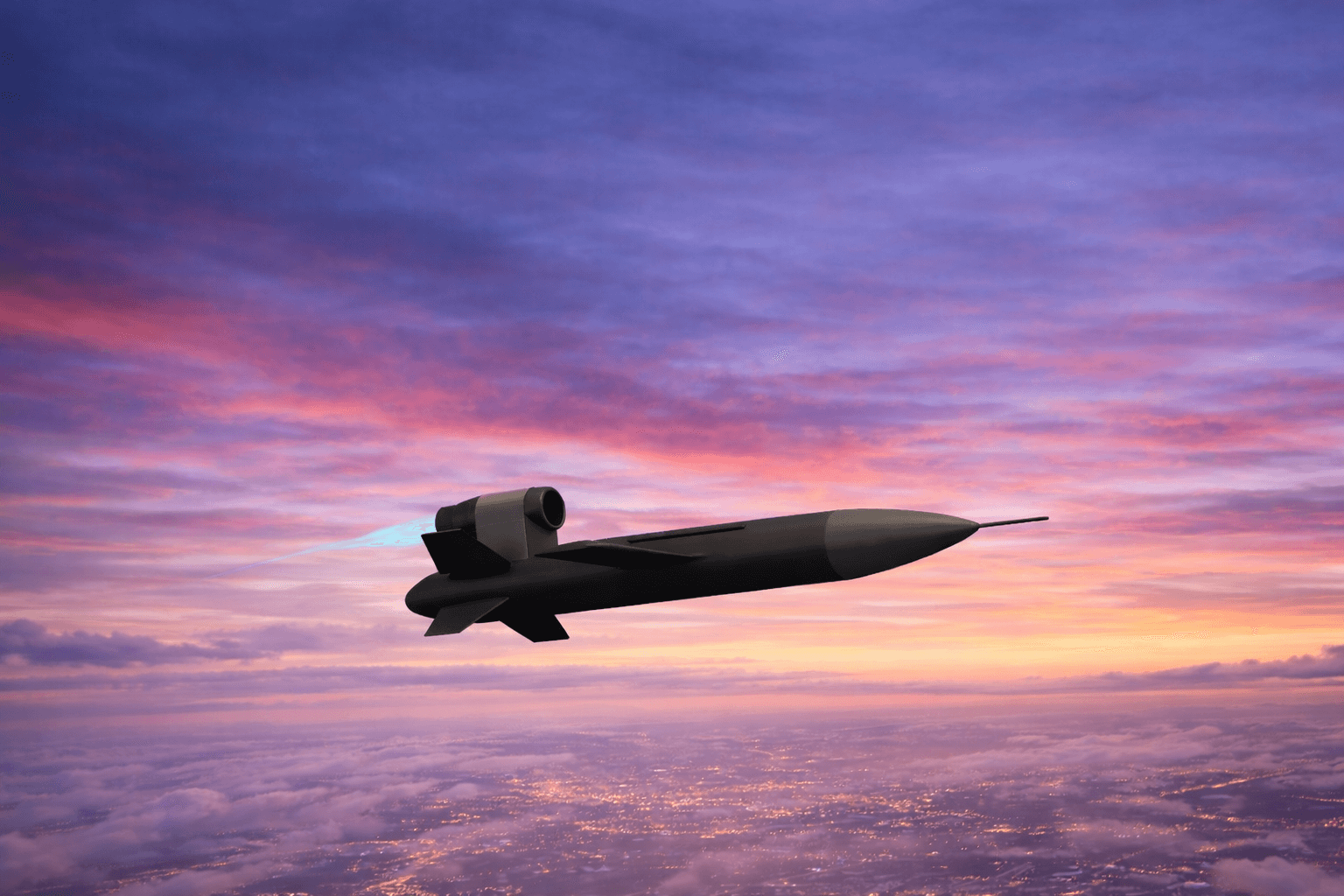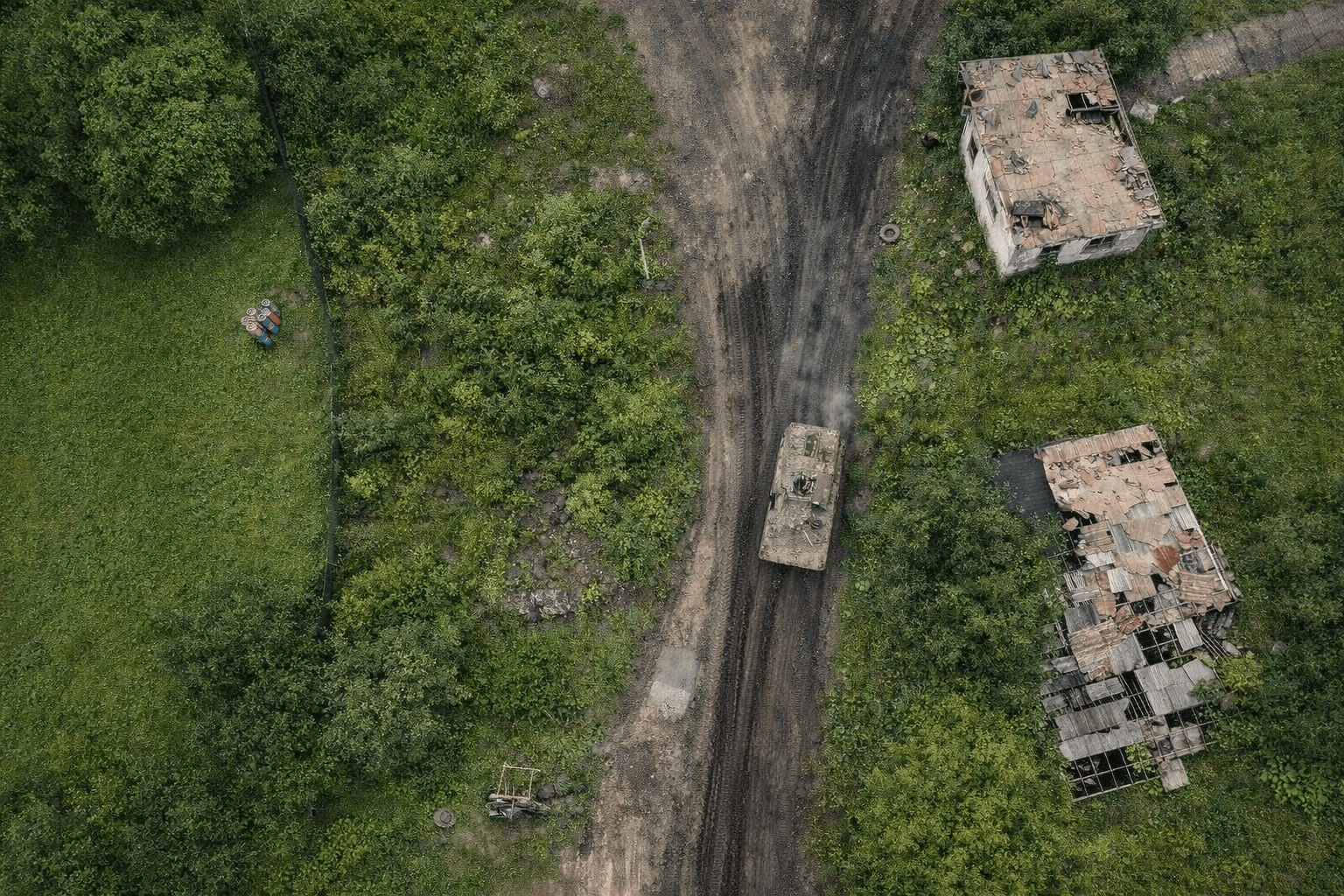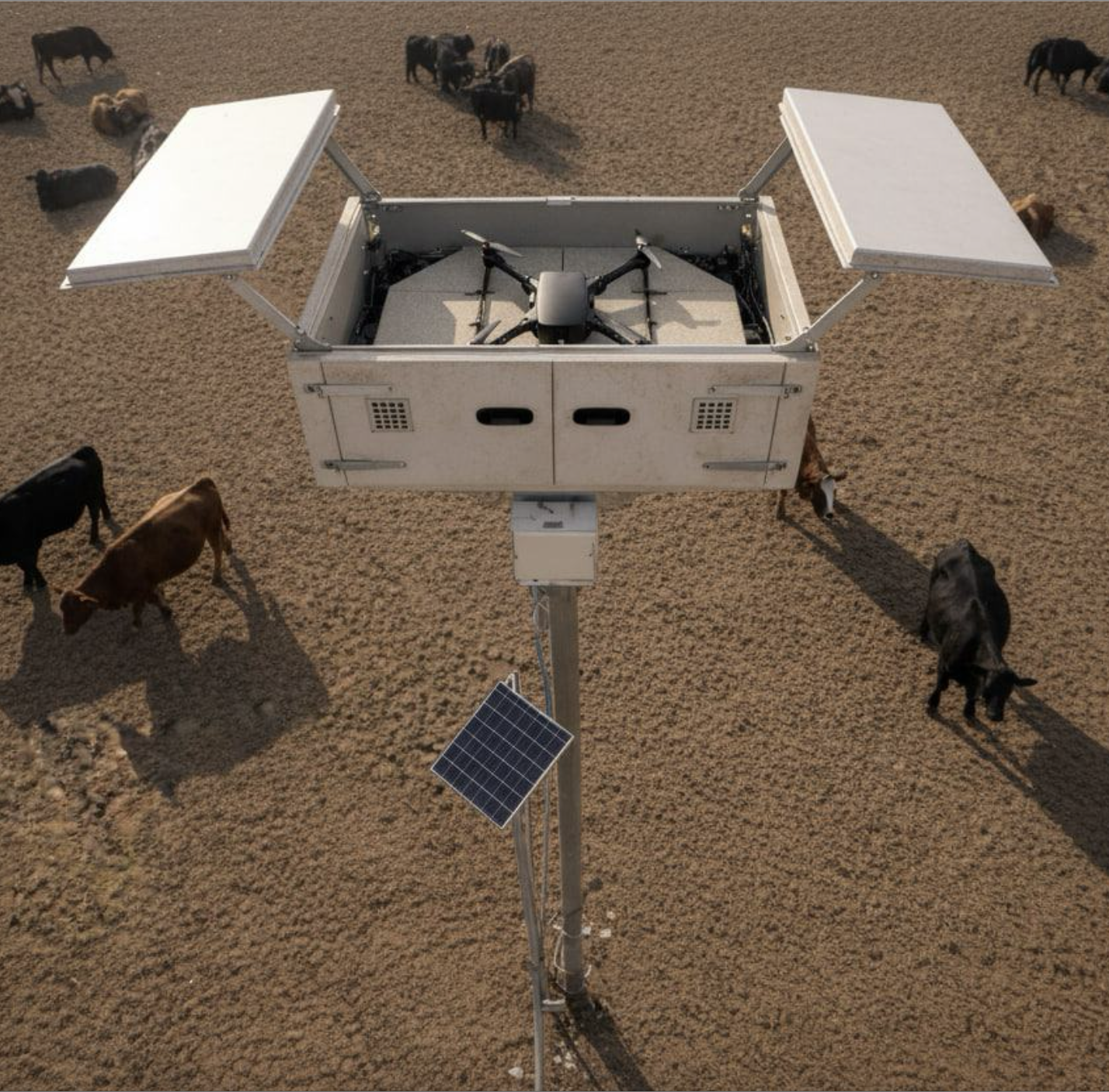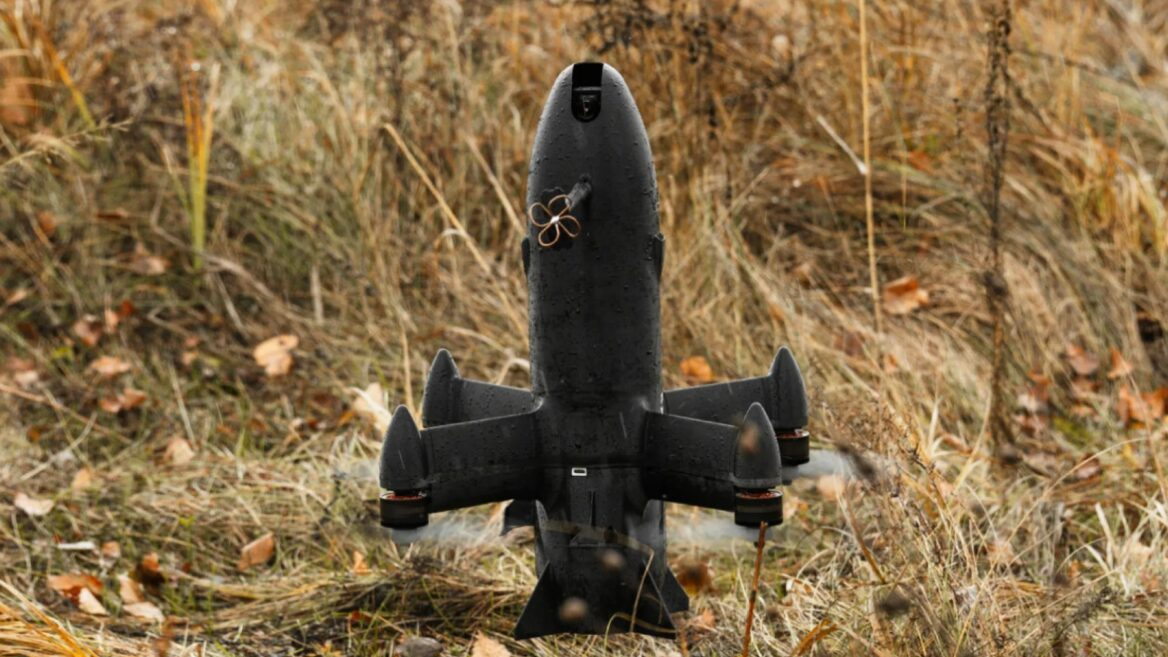
Top 8 Drone Interceptors On the Market Today
Hobby drones used to be a nuisance. Now we have a bigger issue.
From Shahed-style loitering munitions to cheap quadcopters carrying ISR payloads, modern conflicts and critical-infrastructure sites are facing a volume problem. Missiles are effective but expensive. Drone jammers help, until they don’t. That’s why interceptor drones have quietly become one of the most important categories in counter-UAS.
Below are the top 8 most credible drone interceptor systems available today, with low cost per kill, high autonomy, and seamless deployability. A few of them are also in a class of their own.
1. STING
Source: UNITED24 Media
If there’s a poster child for the “cheap beats exquisite” doctrine, STING is it.
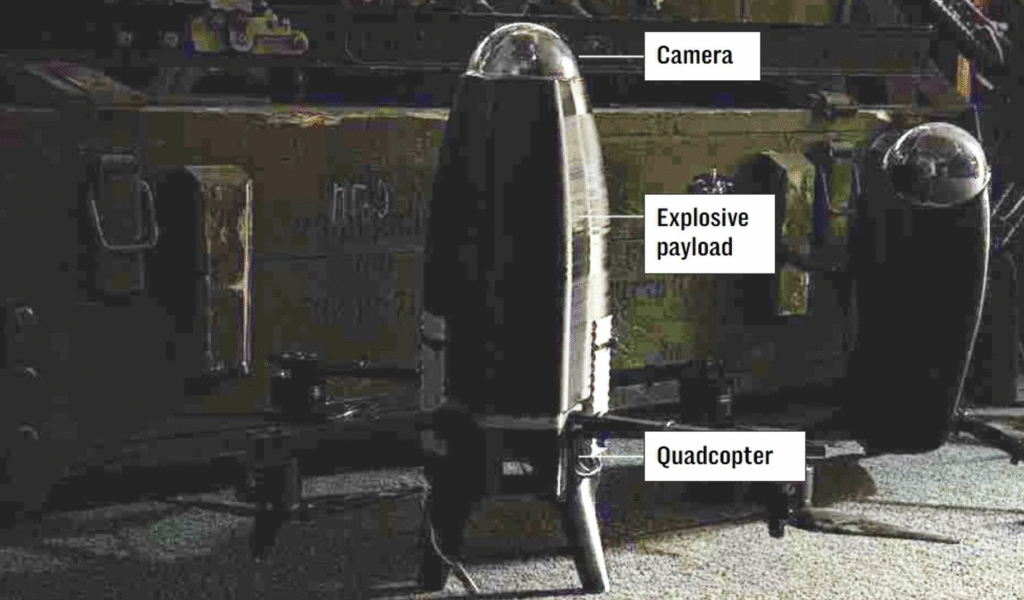
Built by the Ukrainian defense-tech group Wild Hornets, STING is a disposable quadcopter interceptor with a centrally mounted warhead and forward-facing camera. Operators fly it using VR goggles or a ground control station, giving precise situational awareness in the final seconds.
What makes STING remarkable is its economics. At $2,100 per unit, it costs a rounding error compared to missile interceptors. And yet it has allegedly downed 600+ more expensive enemy UAVs in five months, demonstrating a solid ROI. Speed upgrades pushed it from ~160 km/h to 315 km/h, making it fast enough to catch most loitering threats.
Best for: Ultra-low-cost, high-tempo interception.
Trade-off: It’s operator-dependent and designed to be expended. But when volume matters, that’s a major pro, not a nuisance.
2. Octopus
Source: Militarnyi
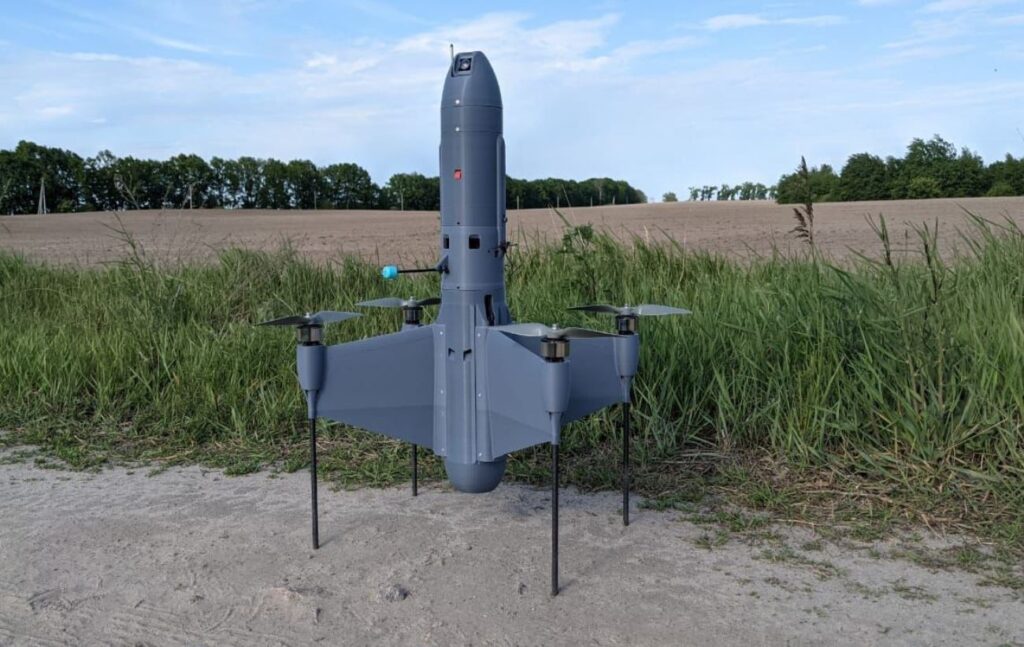
Octopus drone interceptor has an unmistakably distinctive look.
This cylindrical interceptor, developed by Ukrainian engineers and refined with British industry support, uses image recognition for terminal guidance, allowing it to home autonomously in the final phase. That matters when jamming intensifies or the pilot’s reaction time becomes the bottleneck.
Octopus excels where many systems fail: night operations, low altitude, and contested RF environments. It avoids complex launch infrastructure and doesn’t rely on continuous ground guidance. Cost is also disciplined, coming in at under 10% of the target drone’s price.
The UK government has confirmed domestic production starting in January 2026, a strong signal that this system is moving from urgent wartime improvisation to sustained capability.
Best for: High-reliability interception under EW pressure.
Trade-off: Less optimized for ultra-rapid, mass launches than disposable quadcopter interceptors.
3. Swift Beat
Swift Beat doesn’t market aggressively, and that’s usually a tell of some serious advances.
Backed by Eric Schmidt (former Google CEO), the company has been running in stealth mode. What is known, via Ukrainian government statements, is impressive: Swift Beat drone interceptors are said to account for roughly 90% of Shahed one-way attack drone interceptions in certain operational zones.
The platform reportedly blends AI-assisted navigation, targeting, and decision support across interceptors, ISR drones, and strike UAVs. Details are scarce. Results are not.
Best for: Quietly dominant battlefield performance
Trade-off: Availability and transparency. This is not an off-the-shelf system just yet.
4. BLAZE
Source: Origin Robotics
BLAZE is built for the scenario everyone worries about: multiple incoming drones, not all of them armed.
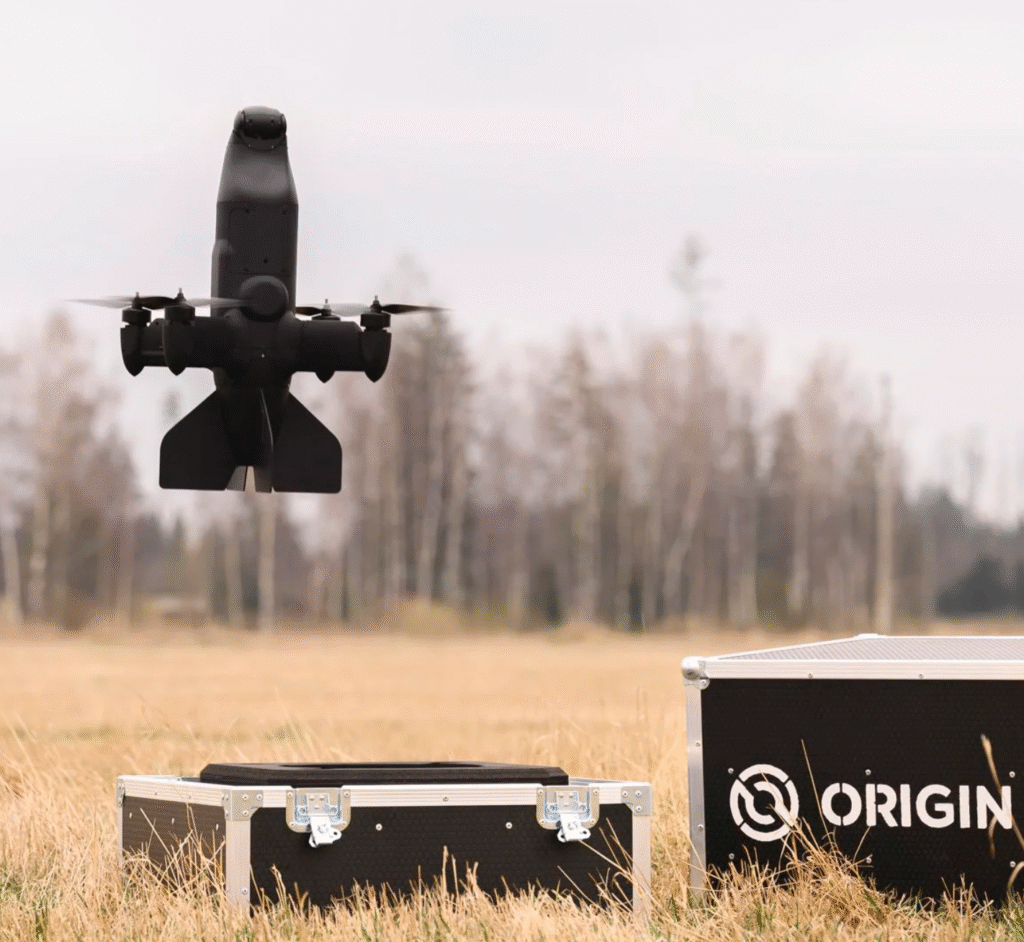
Developed by Latvian Origin Robotics, BLAZE combines radar-based detection with EO/IR sensors and AI-powered computer vision to determine which incoming drones are actually carrying munitions. That prioritization step is what separates it from many interceptors that treat every airborne object as equally dangerous.
From a deployment standpoint, BLAZE is refreshingly practical. It’s man-portable, requires no tools to assemble, and can be flight-ready in under ten minutes. Once configured, the first inceptor can fly out in under 5 minutes, and follow-up launches are under 60 seconds.
Overall, BLAZE offers a good balance between autonomy and control. Target acquisition, classification, and intercept geometry are handled autonomously, but the operator remains in the loop for engagement confirmation. This reduces cognitive load without removing human oversight.
Best for: Rapid-response defense against mixed or weaponized drone swarms
Trade-off: BLAZE’ requires more setup discipline and trained operators. It’s best suited as a selective defense layer, not a brute-force saturation solution.
5. DroneHunter® F700
Source: Fortem Technologies
If you need to stop drones without blowing them up, DroneHunter® F700 remains the benchmark.
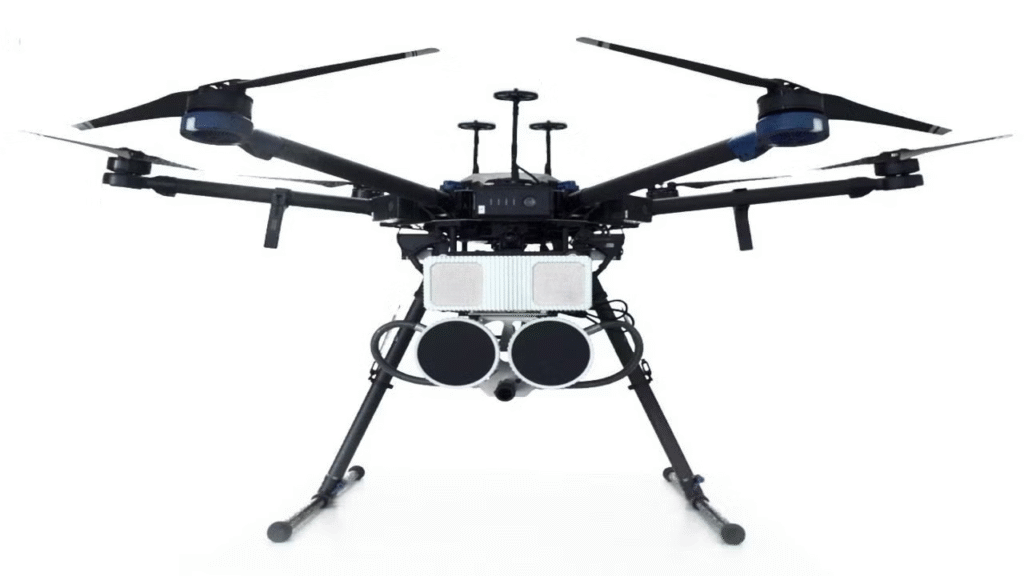
Built by Fortem Technologies, the F700 is fully autonomous and radar-guided, using Fortem’s TrueView® R20 radar to detect, track, and intercept targets day or night. What makes it stand out is its capture-first philosophy. Instead of destroying drones kinetically, the F700 uses net-based systems to neutralize them safely.
Smaller Group-1 drones are captured with tethered nets and physically carried away from sensitive areas. Larger Group-2 drones are handled using the DrogueChute™ system, which deploys a net attached to a parachute, forcing a slow, predictable descent. That predictability is critical when operating over crowds, critical infrastructure, or populated zones. The system is also fast to reset. Launch takes seconds, and the drone can be redeployed in under three minutes.
Best for: Civilian airspace, urban environments, and zero-collateral interception
Trade-off: The F700 prioritizes safety over lethality. It’s not designed for high-speed, high-altitude battlefield threats.
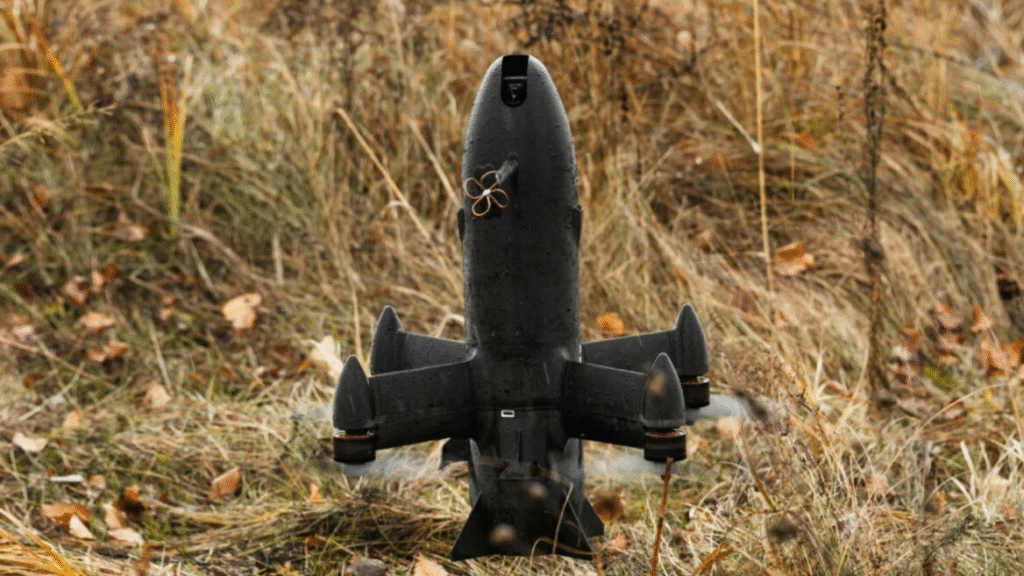
6. P1-SUN
Source: Tech Ukraine
Unveiled at the Dubai Airshow 2025, P1-SUN from SkyFall reflects how quickly Ukrainian interceptor design is evolving.
Built around a modular, partially 3D-printed airframe, the P1-SUN reaches 5 km altitude and recently increased its top speed by 50% over an already-formidable 300 km/h baseline, according to the company spokesperson. That speed expansion opens a new category of targets, including hostile helicopters, not just loitering munitions like the Geran-2.
Best for: High-speed pursuit and expanded target sets.
Trade-off: Less publicly available operational data than earlier Ukrainian systems, but it looks highly promising.
7. Coyote C-UAS
Source: Raytheon
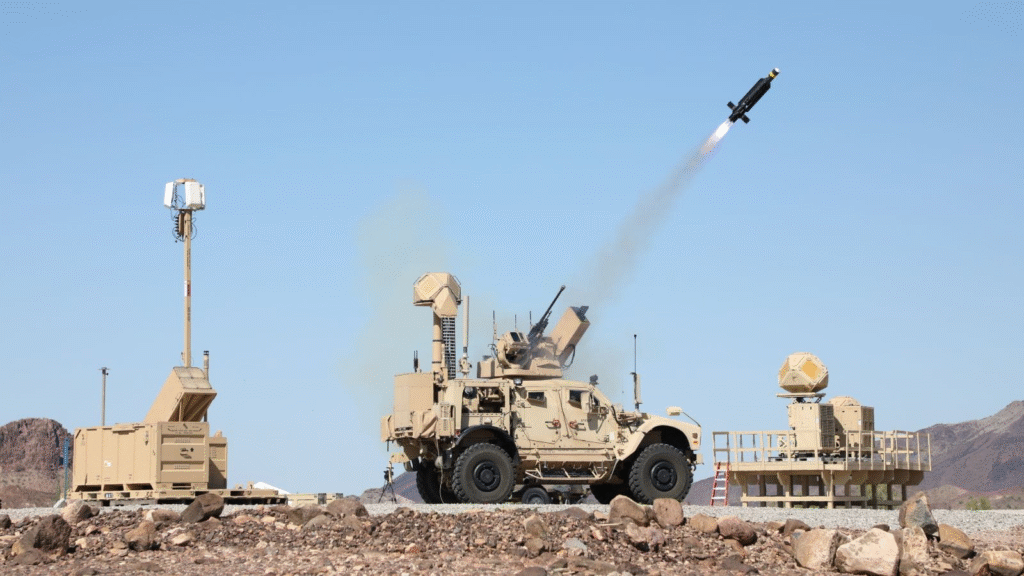
Coyote C-UAS sits at the heavy end of this list, both conceptually and operationally.
Developed by Raytheon, Coyote is a rail-launched, expendable interceptor that blends missile-like launch characteristics with drone-like flexibility. It uses a boost rocket for rapid acceleration, followed by a turbine engine, allowing it to reach longer ranges and higher altitudes than most drone interceptors.
Coyote comes in kinetic and non-kinetic variants and is designed to engage everything from single UAVs to coordinated swarms. It can be launched from ground vehicles, ships, or aircraft, and multiple Coyotes can be networked together for swarm defense scenarios.
The U.S. Army’s $5.04 billion contract award underscores its role as part of a broader integrated air and missile defense architecture, not as a standalone system.
Best for: Long-range, layered military air defense against drones and swarms.
Trade-off: Coyote is effective, but it’s not subtle. Launch infrastructure, logistics, and cost per engagement place it firmly in the military-only category.
8. Interceptor-MR
Source: MARSS
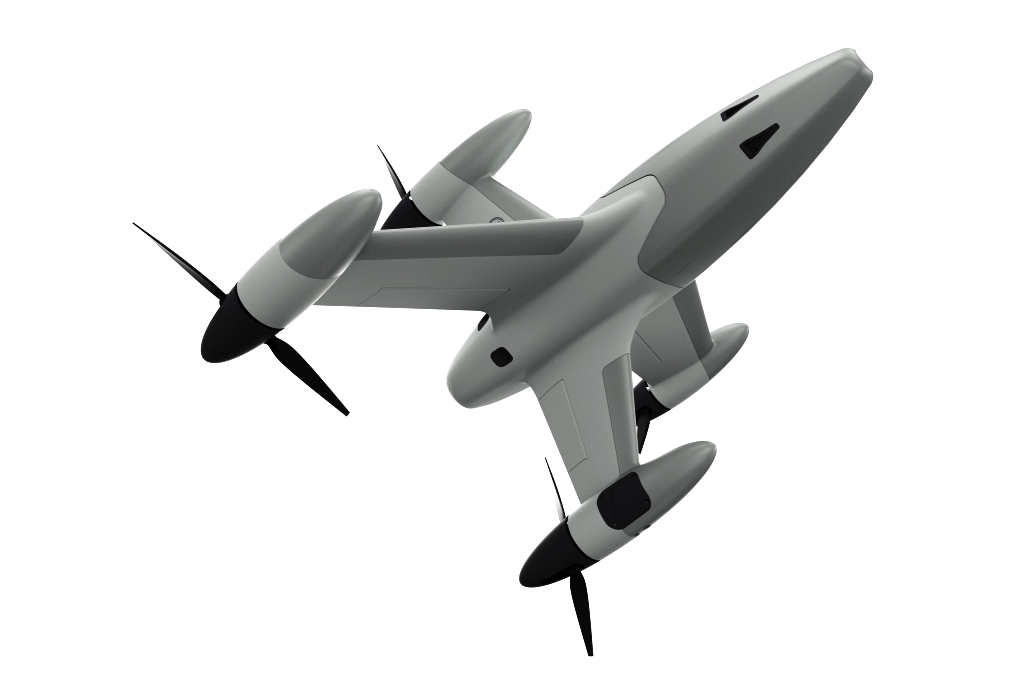
Interceptor-MR is designed for one job: winning the chase.
Built by MARSS, the incerseptor sports a hybrid airframe that combines the speed and efficiency of a fixed-wing aircraft with the agility of a quadcopter. It can reach speeds over 80 m/s while still performing aggressive, close-range maneuvering.
The interceptor is deployed from a vertical smart launcher integrated with MARSS’s NiDAR Core sensor network. Once a threat is detected and verified, Interceptor-MR launches vertically, acquires the target using onboard AI imaging, and pursues it with what MARSS describes as dogfight-level agility.
This makes it particularly effective against fast, evasive Class I and II drones that defeat simpler pursuit algorithms or slower quadcopter interceptors.
Best for: High-speed, highly maneuverable drone-on-drone engagements.
Trade-off: Interceptor-MR is a precision tool, not a mass solution. Its sophisticated propulsion and sensing stack mean higher unit costs and more deliberate deployment. It shines as a high-performance interception layer, not as a cheap answer to high-volume threats.
The Takeaway
Drone interceptors are still ‘coming of age’ as a technology. Many systems remain in limited supply and are mostly reserved for military purposes.
That said, platforms like STING and Octopus show how cheaply and quickly air defenses can scale when volume matters. While interceptors like DroneHunter® F700 and BLAZE prioritize control, discrimination, and safety when operating near people or infrastructure.
At the heavier end, Interceptor-MR and Coyote C-UAS belong in layered defense architectures where speed, altitude, and integration matter more than unit cost.
The right choice depends on where you expect drones to fail, and how many you expect to face.