The Future of Security: Air-Launched Interceptor Drones
Ground launches of interceptor drones are a major part of the counter-drone playbook. The next frontier is messier and more interesting: launching them from aircraft and naval platforms, closer to the threat and with more energy already in the system.
That shift says a lot about where anti-drone defences are heading. Sure, fixed defensive positions still matter, especially around critical infrastructure, bases, and cities. But attack drones are increasingly being used across wider routes and lower altitudes, which renders a static response futile.
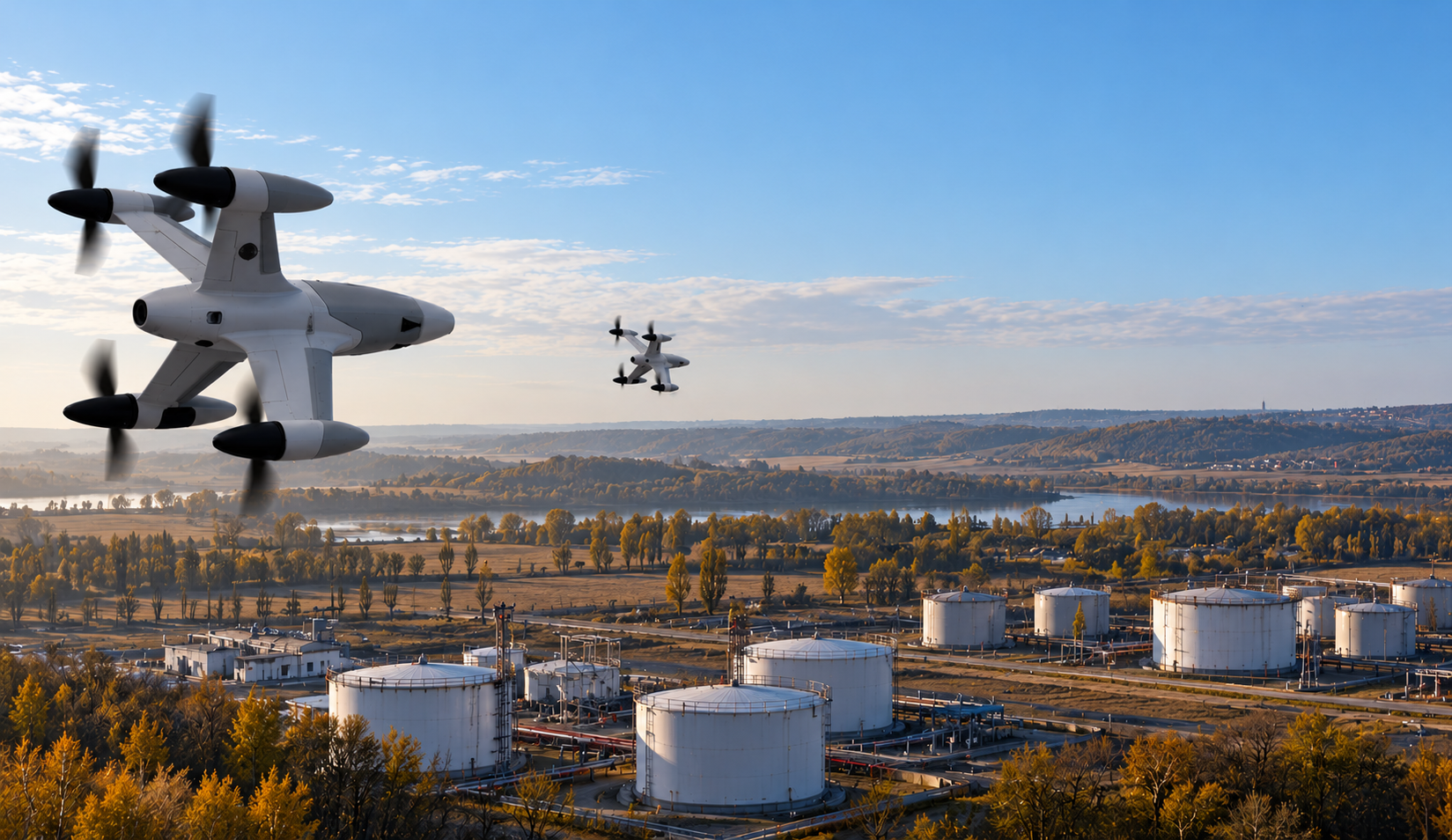
Air-launched interceptor drones can be launched closer to the target, meaning faster response time and extended useful reach. Not to mention lower chances of collateral damage after a hit near the protected structures. Brilliant concept, yet more difficult execution as gravity, separation dynamics, guidance, and jamming come into play.
What an Air-Launch Interceptor Drone Setup Needs
An air-launched interceptor needs three parameters to be viable:
- Compact carriage geometry. The drone has to fit cleanly on a pylon, rack, pod, internal bay, or another launch setup, where it can be securely retained before launch and clearly separate afterward. A cheap interceptor that clips its carrier aircraft on release means an assignment fails in a spectacular fashion.
- Post-release stabilization. An interceptor drone leaves the aircraft into turbulent airflow, shifting pressure, and whatever awkward attitude the launch imparts. The flight controller has to recover quickly because the first seconds after release are the least forgiving. That is where software-defined defense has to do very physical work, something you can build with Osiris Drone OS.
- Effective target acquisition. Air launch works best when the carrier can help cue the interceptor on target tracking through onboard sensors, crew observation, or a connected targeting system. The interceptor then needs to pick up the target, maintain track, and close the distance fast enough to make the launch worth the trouble.
Likewise, two more factors give drone air-launch an edge. The platform will need high-speed propulsion to quickly reach the target. Navigation has to hold up under contested conditions as well. Many concepts lean on AI-assisted guidance, inertial navigation, or other GNSS-denied-capable systems, so the drone can keep flying under jamming. That requirement is table stakes at this point. Any system built around perfect signal conditions is preparing for a very polite battlefield.
A common air-launch interceptor drone configuration today is a small fixed-wing or quadcopter interceptor with an armable payload, a simplified airframe, and front-end sensing tuned to the expected target. For ramming-style interceptors, the airframe may be reinforced around the strike point, with fragile electronics placed away from the nose. The design logic is blunt, but effective enough to matter
New Developments in Air-Launched Interceptor Drones
Ukraine has become one of the clearest live test beds for air-launched counter-drone systems.
The armed forces have recently repurposed a Soviet-era An-28 aircraft into a mobile anti-drone platform, carrying small interceptor drones under its wings and launching them toward hostile Shahed drones.
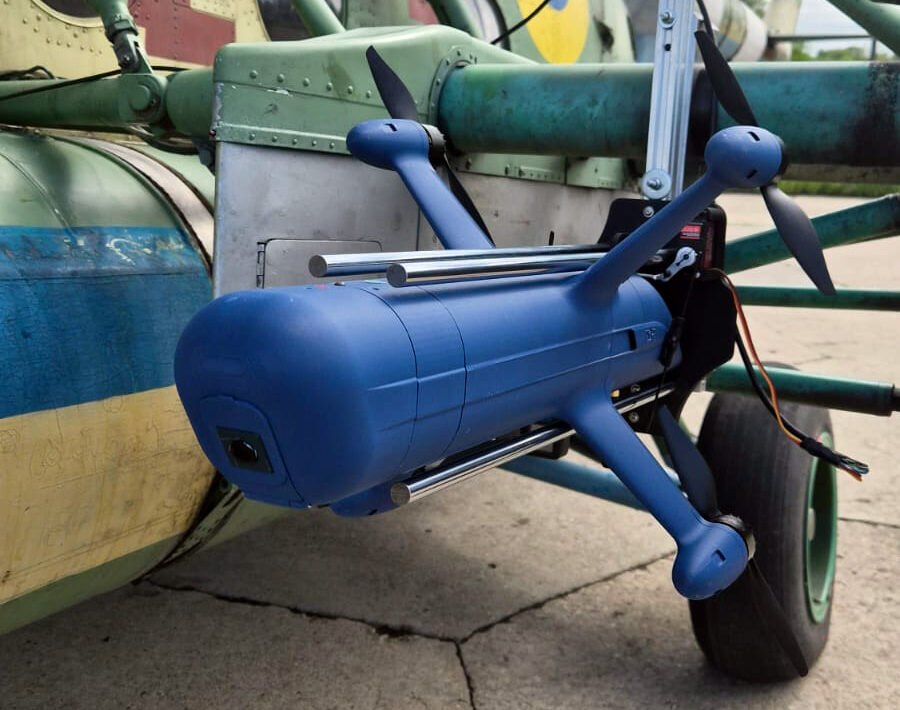
The An-28 has at least three pylon mounting points under each wing, giving it room for up to six interceptor drones per sortie. Crews use an onboard optical system to acquire targets visually, then release the interceptor at altitude, where it can accelerate toward engagement speed.
The aircraft brings the interceptor closer to the target before release, which helps reduce response time. Altitude adds range and kinetic energy. Loiter time gives crews a way to patrol predictable drone routes instead of reacting only from fixed ground positions.
Two drone models appear central to the setup: the SkyFall P1-Sun and the Merops AS-3 Surveyor. The SkyFall P1-Sun uses a modular 3D-printed airframe and reportedly reaches speeds of up to 280 miles per hour. The Merops AS-3 Surveyor carries an explosive warhead for proximity detonation, giving the system a different engagement profile from pure ramming designs.
Estonia is moving in a parallel direction with its Mark I anti-drone missile. During recent trials, the light-weight, autonomous missile was successfully launched from a pylon mounted on a ground-based launcher. The development work continues around safe separation and stable flight for broader launch conditions. The team’s ambition is a universal weapon that can launch from land, naval, and aerial platforms.
That universal-launch idea deserves attention. It points toward a counter-drone architecture where the interceptor is less tied to one platform and more integrated across multiple carriers.
Counter-Drone Defense Also Looks to the Sea
The idea of universal drone interceptor launches — ground, air, and sea — is also being tested in Ukraine.
In mid-May 2026, the Black Sea Legion ran successful trials of the Katran X1.2 naval drone carrying 27 MAC Dead Fly interceptor drones. The Katran X1.2 is a multi-purpose naval drone capable of operating as a suicide drone, carrying two short-range R-73 missiles, and deploying various aerial drones. The vessel is nine meters long, uses a 350-horsepower engine, and reportedly has a range of up to 1,600 kilometers. Those numbers suggest a platform designed for reach as much as immediate interception.
The MAC Dead Fly interceptors add the air-defense layer. They are equipped with built-in AI to detect targets independently and reportedly reach speeds of up to 380 kilometers per hour, with engineers working to increase that to 450 kilometers per hour. Both the naval drone and interceptors were operated from an onshore mobile command post via the MAC Mission Control system.
Spain’s recent naval trial points in a related direction, even though the use case was different. The Spanish Navy brought together a coastal patrol vessel, an H135 helicopter, and unmanned aerial systems in a tactical exercise near Rota.
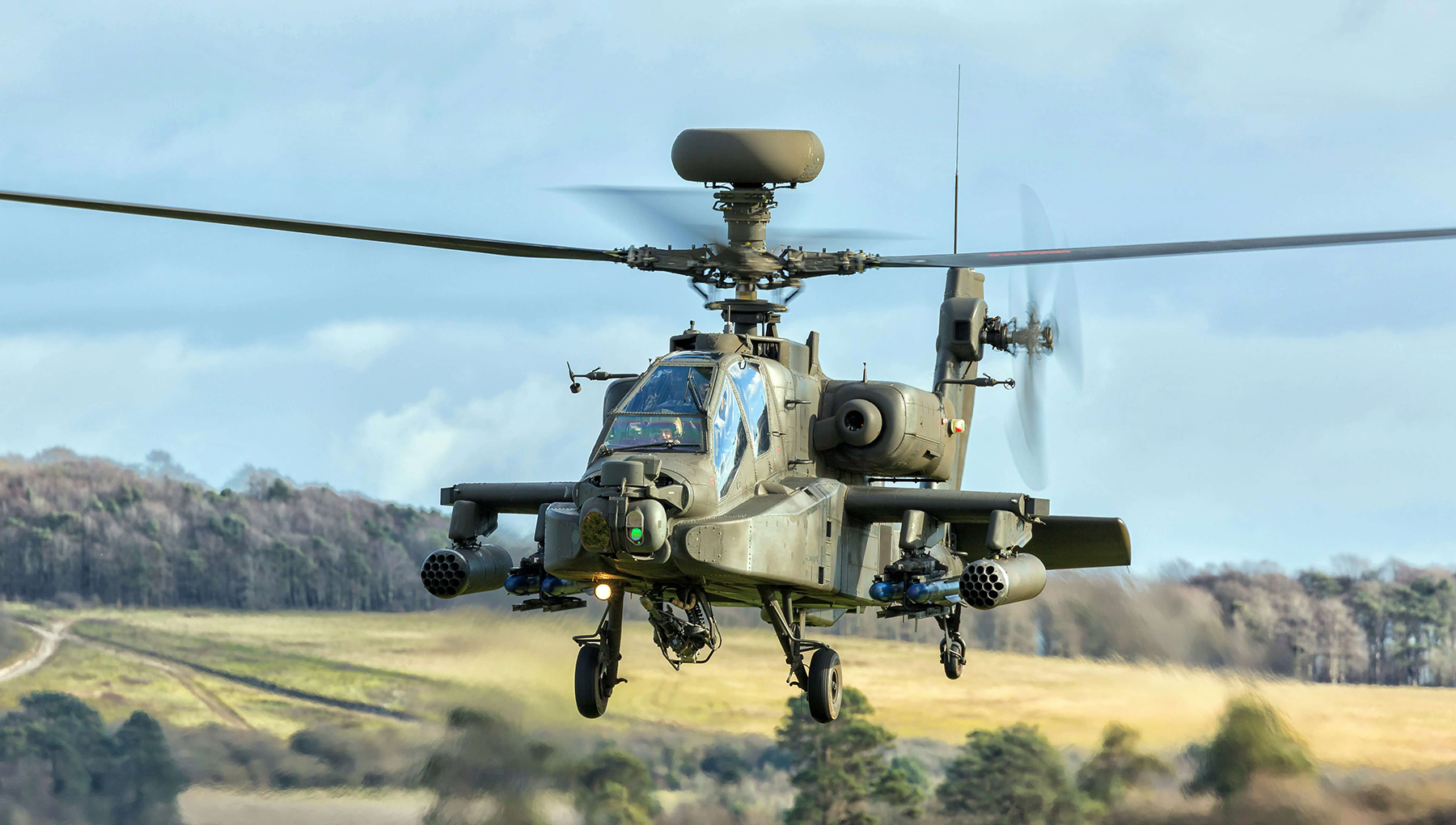
During the trial, unmanned platforms took off and landed from a moving ship, while a pilot aboard the helicopter controlled the drones through Airbus Helicopters’ HTeaming tablet. The throughline is platform networking. Ships, aircraft, drones, and command systems are beginning to operate as connected launch and sensing nodes.
While both were early trials (which don’t signal 100% field readiness), the direction is hard to miss. Interceptor drones are moving from point-defense tools toward distributed launch ecosystems. Air and sea platforms give them reach, flexibility, and better starting geometry.