AI-Powered Interceptor Drones as the New Layer of Air Defense
Air defense used to be a game of scale and cost. Large radar systems, missile batteries, and heavy artillery defined the perimeter. Expensive to build, expensive to operate, and often overkill for the kinds of threats showing up today.
This asymmetry has massively accelerated research into alternative solutions — and AI-enabled interceptor drones have emerged as a strong contender to protect against low-cost FPV drones and loitering munitions.
The Shift From Heavy Systems to Distributed Air Defense
Traditional air defense was built for aircraft and missiles with predictable trajectories and clear detection signatures.
Low-cost drones disrupt that model. They are cheap enough to deploy in volume. Iran’s
Shahed drones are estimated to cost only $20,000 to $50,000 apiece. So they can easily overwhelm ground defense systems through sheer numbers, making protection a much costlier endeavor.
This is where interceptor drones start to make sense. Instead of firing a million-dollar missile at a relatively disposable drone, operators can deploy a comparable unit to intercept it mid-air. The economics begin to align. The architecture changes from centralized systems to distributed networks of smaller, smarter assets.
Where AI Gives Interceptor Drones an Edge
Interceptor drones without autonomy would still require tight human control. That becomes unmanageable quickly once multiple targets enter the airspace.
AI changes that calculus in two ways: decision speed and environmental resilience.
To intercept a moving target, a drone needs to process sensor data, adjust its trajectory, and execute precise terminal guidance in real time. That execution loop is now increasingly being guided by state-of-the-art algorithms.
Modern drone operating systems combine sensor fusion with onboard compute, allowing interceptors to maintain accuracy even when GPS signals degrade or disappear. In contested environments, where jamming is a given, autonomy capabilities move from “nice to have” to table stakes.
There’s also a quieter shift happening: autonomy is becoming modular.
Software stacks like Osiris Drone OS are designed to operate across platforms, enabling different drones to carry out advanced tasks like autonomous flight path follow, target tracking, payload management, object recognition, and fail-safe commands.
In many cases, the drone becomes a conduit of decision-making speed over raw firepower.
How AI-Enabled Interceptor Drones Actually Get Deployed
Conceptually, interceptor drones are simple. Detect, track, engage. Operationally, the setup is more layered. Most interceptor drones rely on a combination of sensor parameters to detect and engage with targets.
Take acoustic-based systems like Talon Avionics’ SECTR. Rather than relying on the radar, the platform listens for drone motor signatures to detect threats before they are visible in the airspace. Such passive detection has the advantage of not broadcasting its own position.
From there, radar fills in the broader picture, feeding a fusion engine that classifies targets and assigns interceptors. Each interceptor uses onboard AI to distinguish between its own noise and the target’s signature, guiding it to impact with a reported hit probability north of 95%.
Worth pausing on that architecture. It reflects a broader design philosophy: multiple sensing modalities feeding into autonomous decision layers. Redundancy is built in because any single signal source can fail under electronic warfare conditions.
That same logic carries through into how some systems approach autonomy at the platform level.
OSIRIS uses AI for Dynamic Target Tracking
If earlier air defense systems signaled power through size, interceptor drones flip that logic.
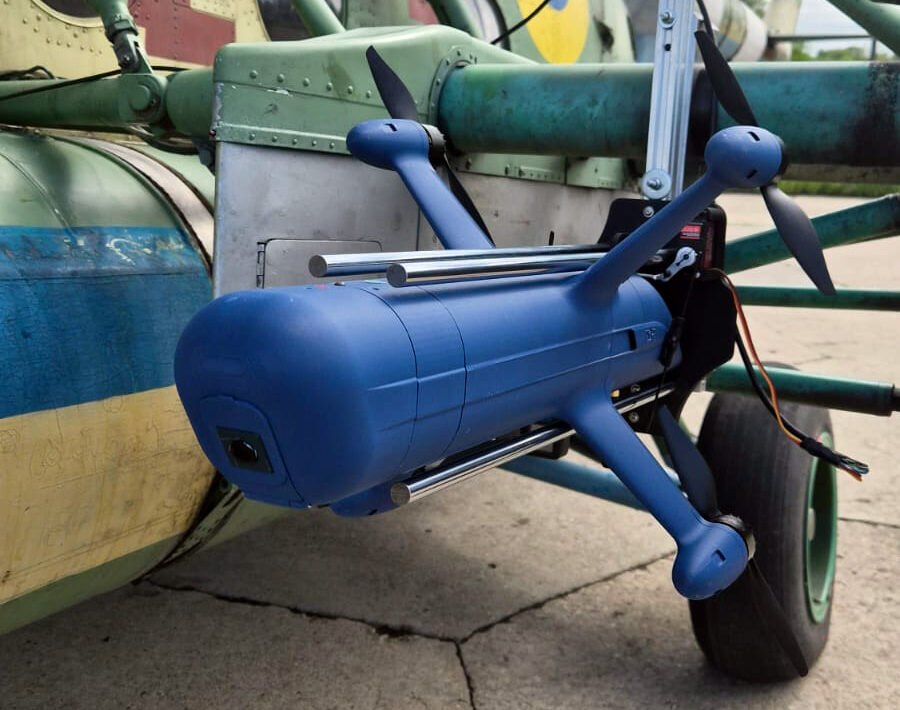
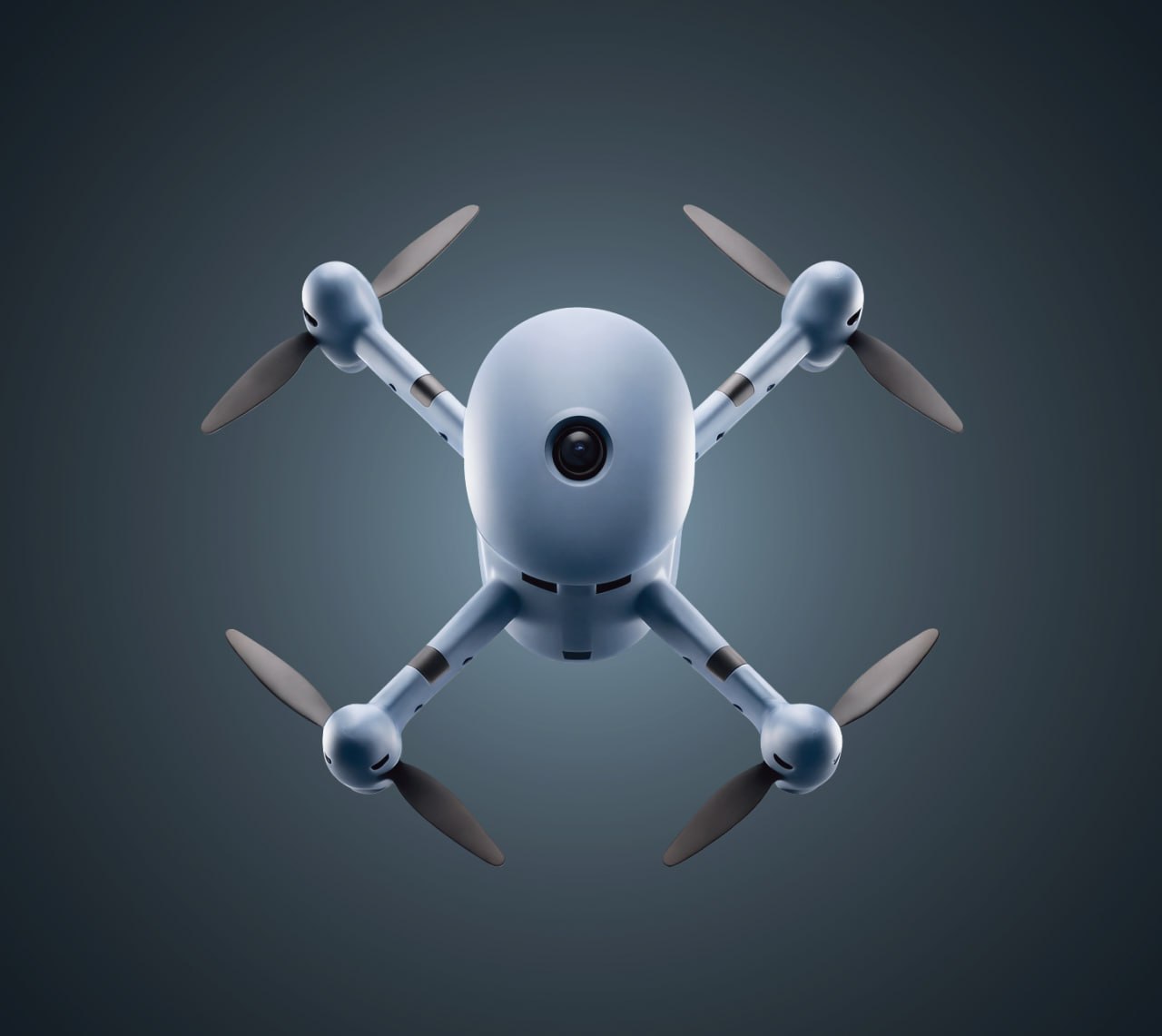
OSIRIS UEB-1 interceptor drone weighs just over 3 kilograms (6.6 lbs) and can be carried and deployed with minimal logistics. Its range reaches up to 18 kilometers (11.2 miles), with a payload sufficient to neutralize aerial targets.
The design emphasis sits on speed and responsiveness. High-speed flight enables the drone to chase fast-moving targets, while onboard processing reduces dependence on operator input. AI predicts target movement and adjusts the interception path dynamically.
There’s a pattern emerging here: Hardware is getting lighter, and software now does more heavy lifting. And that balance is likely to hold.
Fourth Law Leverages AI for Terminal Approaches
Electronic warfare tends to peak in the final stretch of an interception. Control links drop, and manual piloting becomes unreliable. This is where optics-based autonomy modules come into play.
Systems like The Fourth Law’s TFL-1 effectively take over control during the final approach. By using computer vision and onboard processing, the drone can identify and lock onto targets independently, even when external communication is limited
By shifting control from operator to algorithm at that moment, these systems sidestep one of the most fragile parts of the engagement process. The drone becomes resistant to jamming by design. This helps explain why this approach is gaining traction.
Brave1 Relies on AI for Drone Swarm Coordination
Single interceptor drones are useful. Coordinated swarms introduce a different level of capability.
An innovation hub Brave1 is thus looking into how multiple interceptors can operate together, sharing data and coordinating engagements. The goal is efficiency: one interceptor per target when possible, multiple when necessary. This is where autonomy shifts from individual decision-making to collective behavior.
Communication between drones, dynamic task allocation, and coordinated targeting all become part of the system design. Human operators remain in the loop, but their role shifts toward oversight rather than direct control.
But that transition carries implications. It reduces cognitive load for operators, especially during large-scale attacks. It also raises the stakes for software reliability, since failure modes become harder to predict in distributed systems.
What This Means for the Future Air Defense Strategies
AI-powered interceptor drones don’t replace traditional air defense. They extend it.
High-end missile systems still play a role against advanced threats. But for the growing category of low-cost aerial attacks, interceptor drones offer a more proportionate response.
They also change how defense is structured.
Instead of relying solely on centralized systems, operators can deploy layered architectures:
- Long-range detection and tracking
- Mid-range interception using traditional systems
- Close-range defense with autonomous interceptors
That layering creates flexibility, but also introduces complexity.
Command frameworks need to accommodate autonomous decision-making while maintaining human oversight. Data flows need to support real-time coordination across systems. And integration becomes the hill to defend, especially as more platforms enter the ecosystem.
This shift aligns with a broader move toward software-defined defense capabilities, an approach Osiris is actively building around. Osiris Drone OS is based on a modular, API-driven architecture that allows drones, sensors, and mission logic to plug into a shared environment. So you can deploy and update applications without reworking the entire stack.
This way, you can integrate different hardware platforms and run multiple AI models at the edge — all while managing the missions through a unified control layer. Secure communication and OTA updates are also built in, which starts to matter once a UAV fleet grows beyond a handful of units.
Learn more about the drone OS, powering the best autonomous UAVs across industries, including our interceptor drone.